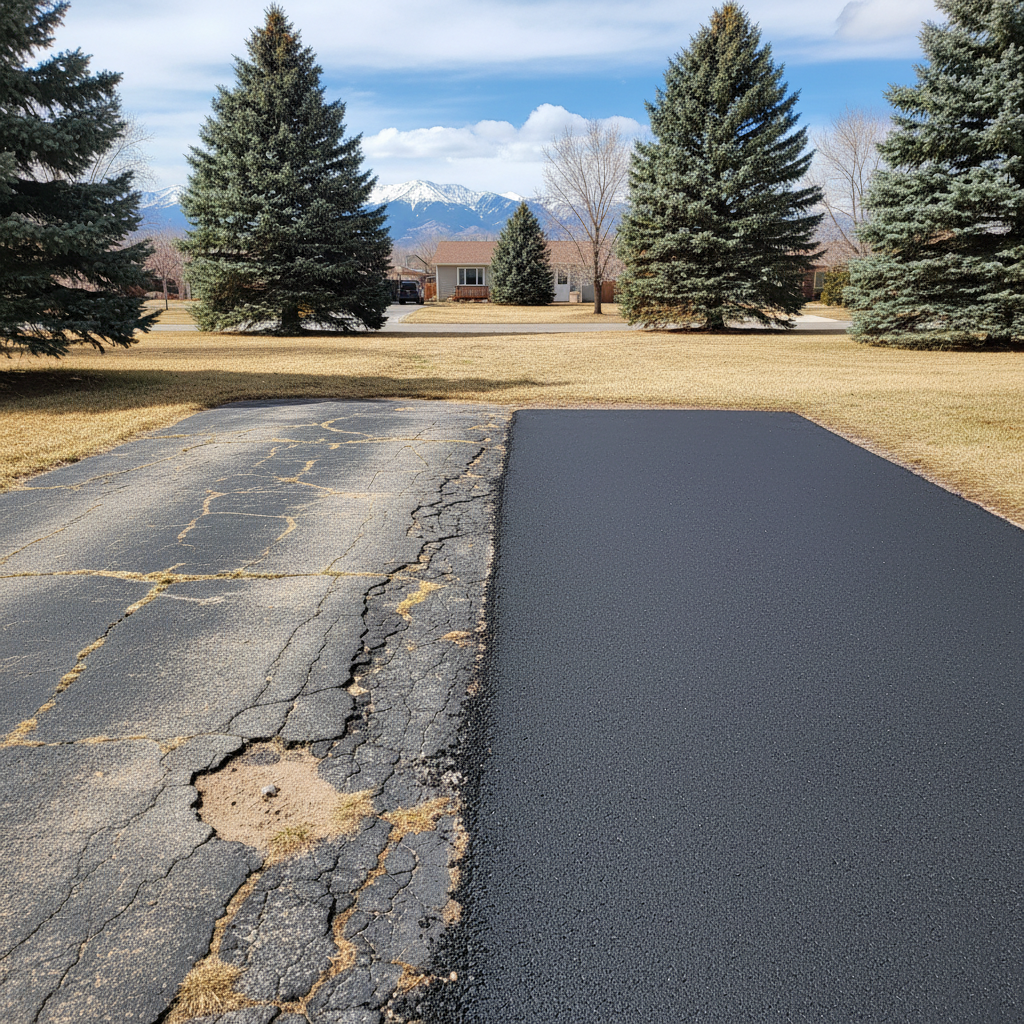
Alright, let's talk about patching your asphalt. Whether it's your driveway, a parking lot, or even a private road, sooner or later, you're going to get some potholes or worn-out spots. When that happens, you've mainly got two ways to patch things up: infrared asphalt repair or the good old saw-cut and remove method. Both have their place, sure, but one usually comes out on top for most folks around Northglenn.
Infrared Asphalt Repair: The Quick Fix
First up, infrared. This method uses special infrared heaters to warm up the existing asphalt right around the damaged area. We're talking about getting it hot enough to become pliable again. Once it's soft, we rake out the bad stuff, add some new asphalt mix, and then compact it all together. It's kind of like melting the old and new into one smooth patch.
Here's what I've seen with infrared:
- Cost: Generally, it's cheaper upfront. Less labor, less material to haul away. It's often quicker to do, too.
- Durability: This is where it gets tricky. When someone does it right, it can look pretty good and hold up for a while. The problem is, you're relying on heating up existing, often aged, asphalt. That asphalt has already lost some of its flexibility and binders, you know? You aren't really getting a full depth repair with fresh material throughout. Over time, especially with our freeze-thaw cycles here in Colorado, I've seen these patches fail faster than a saw-cut repair. The edges can be a weak point if the old and new don't bond perfectly.
- Maintenance: Not much different than any other asphalt. You still need to sealcoat it eventually.
- Appearance: When it's first done, it can look very smooth and seamless because you're blending the materials. It's often pitched as a 'seamless' repair.
It's a decent option for minor surface issues or if you need a very quick, temporary fix before a full overlay. Think of it as a band-aid that looks really nice.
Saw-Cut & Remove: The Gold Standard
Now, let's talk about the saw-cut method. This is what M5 Distribution typically recommends for a truly lasting repair. With this approach, we use a saw to cut out a precise, rectangular section right around the damaged asphalt. We go deep, removing all the compromised material – sometimes right down to the sub-base if that's also an issue. Then, we clean out the area, apply a tack coat (which is basically a sticky asphalt emulsion to help the new material bond), and fill it with fresh, hot asphalt mix. Finally, we compact it thoroughly.
Here's the breakdown for saw-cut:
- Cost: It's usually more expensive upfront. You've got more labor involved in cutting, removing, and hauling away the old material. Plus, you're using more new asphalt, naturally.
- Durability: This is where it really shines. You're removing all the bad stuff and replacing it with brand new, properly compacted asphalt. The edges are clean and strong, and with a good tack coat, you get an excellent bond between the old and new. These patches hold up significantly better over time, especially against the harsh sun and heavy snow we get in Northglenn. I've seen these last for years and years, often outliving the surrounding original asphalt.
- Maintenance: Same as infrared – sealcoating helps protect it.
- Appearance: You'll have a visible seam where the new patch meets the old asphalt. It's a clean line, but it's definitely there. It won't be 'seamless' like an infrared patch, but it'll be structurally sound.
My Recommendation for Northglenn Homeowners
Look, if you're just trying to get by for a year or two, or if you have very shallow, minor surface imperfections, infrared can work. But if you want a repair that's going to last, handle our crazy Colorado weather – those hot summers, freezing winters, and the constant expansion and contraction – then the saw-cut and remove method is the way to go, hands down.
Especially with the clay soils we often deal with around areas like the Fox Run neighborhood, you want a repair that addresses the full depth of the asphalt and provides a stable, long-term solution. A solid saw-cut patch will stand up to the ground movement and temperature swings much better.
It's an investment, sure, but you're paying for a patch that won't be failing on you in a couple of years. You don't want to be patching the same spot over and over again, do you? Do it right the first time, and you'll save money and headaches in the long run. Give M5 Distribution a call if you've got some potholes that need fixing. We'll get you sorted out with a repair that lasts.