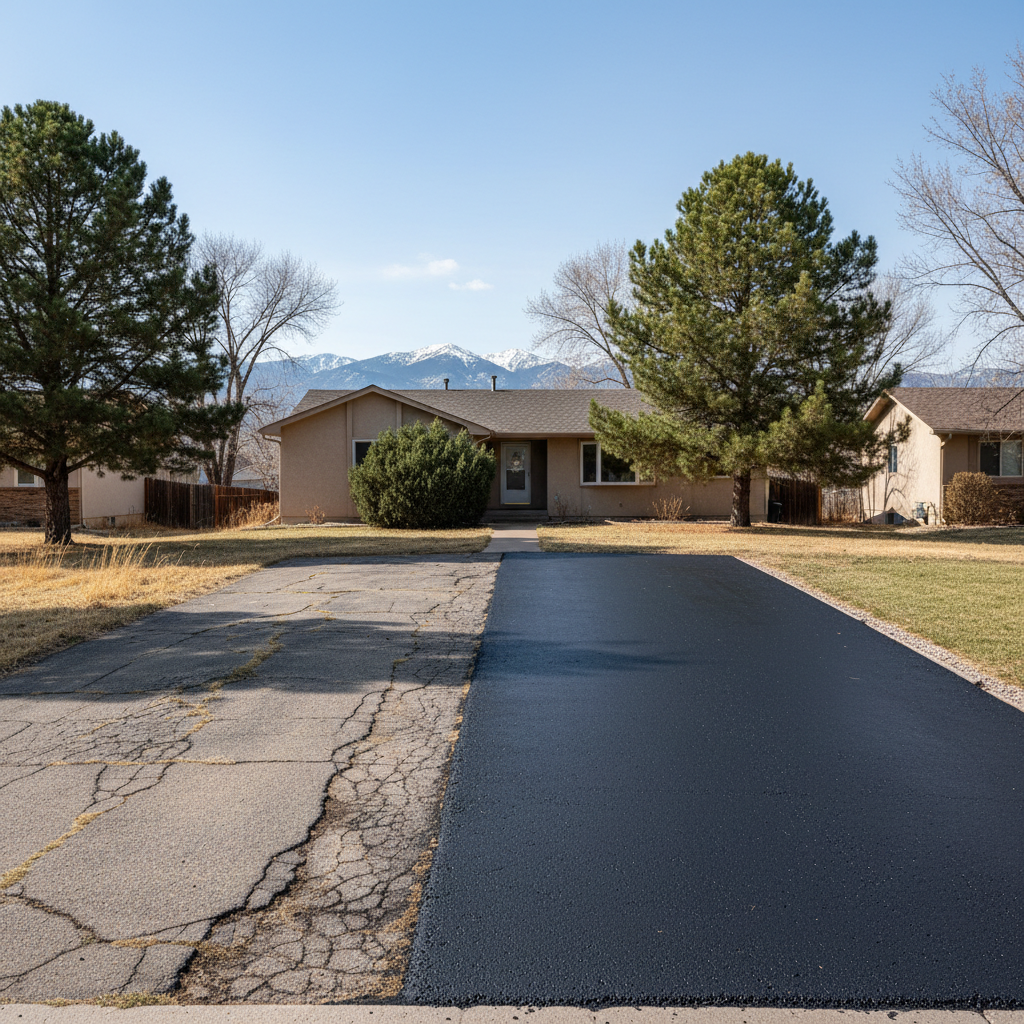
Alright, Northglenn, let's talk driveways. You're thinking about putting in a new one or finally getting rid of that old, cracked mess, and you're probably asking yourself: concrete or asphalt? It's a question I hear all the time, and honestly, there isn't one "best" answer for everyone. But I can definitely share what I've picked up working on driveways across this whole area, from the older homes near Webster Lake to those newer builds up by Huron Street.
Initial Cost: What's Your Budget Looking Like?
Let's just get this out of the way first: money. Generally speaking, asphalt will be cheaper upfront. You'll usually see a lower cost per square foot for both the material and the installation. This is a big reason why a lot of folks pick it, especially if they've got a really long or wide driveway. It's a fast way to get a good, solid surface without emptying your wallet immediately.
Concrete, on the other hand, usually costs more to put in. The materials are pricier, and the labor can be a bit more involved, particularly if you're going for any kind of decorative finish. So, if your budget is pretty tight right now, asphalt often wins this round.
Durability & Our Colorado Weather
Now, this is where things get interesting, especially with our wild Colorado weather. We get those scorching summer days, then freezing winters with snow, ice, and those brutal freeze-thaw cycles. It's tough on any paving material, let me tell you.
- Asphalt: It's flexible. That's its real strength. When the ground underneath shifts a bit, or when temperatures bounce all over the place, asphalt can expand and contract without cracking as easily as concrete. It handles de-icing salts pretty well too, which is good because we certainly use a lot of that stuff around here. However, asphalt does soften in extreme heat, and heavy vehicles can leave ruts if it hasn't cured properly or isn't maintained. It also needs sealcoating every few years to keep it safe from UV rays and moisture — that's an ongoing maintenance cost.
- Concrete: This material is seriously tough. It's rigid and can take heavy loads without rutting. A concrete driveway that's installed right can last a very long time, often 30 years or even more, especially if it's got good rebar or mesh reinforcement. The downside? It cracks. Those freeze-thaw cycles we experience? They're concrete's worst enemy. Water seeps into tiny cracks, freezes, expands, and then boom – bigger cracks, spalling, and eventually potholes. De-icing salts can also damage the surface of concrete if it's not sealed or if the mix wasn't quite right.
Maintenance: What Are You Signing Up For?
Neither option is truly "maintenance-free," no matter what anyone tells you. It's just a different kind of work, really.
With asphalt, you're looking at regular sealcoating. I usually tell people every 2-5 years, depending on how much traffic it gets and how much sun it sees. This protects the surface, brings back its color, and makes it last longer. You'll also need to patch cracks and potholes as they pop up. Think of it like giving your driveway a fresh coat of paint every now and then.
Concrete maintenance is more about preventing problems. You'll want to seal it periodically, maybe every 3-5 years, to protect it from moisture and de-icing salts. If cracks do appear, you'll need to fill them to stop water from getting in, which can cause bigger issues. If you end up with spalling or serious potholes, repairs can be more involved and sometimes harder to make them blend in perfectly.
Appearance & Curb Appeal
This is purely a matter of taste, of course, but there are some general differences.
Asphalt gives you that classic, deep black look. It's clean and uniform when it's freshly sealed. Some people find it a bit stark, but it does offer a nice contrast to landscaping and house colors. Over time, between sealcoats, it can fade to a grayish color.
Concrete offers more options. You can get it in various colors, stamped patterns, or even exposed aggregate finishes. This lets you customize it a lot more to match your home's style. It generally looks lighter and brighter, which some people prefer, especially if they want to reflect heat in the summer.
My Recommendation for Northglenn Homeowners
Okay, so after all that, what do I usually tell my Northglenn neighbors? For our climate, with its intense sun, heavy snow, and big temperature swings, both options definitely have their place.
If you're on a tighter budget and don't mind the routine of sealcoating every few years, asphalt is a fantastic, cost-effective choice. It handles our freeze-thaw cycles well because it's flexible, and a properly installed and maintained asphalt driveway from M5 Distribution will last you a good 15-20 years, no problem.
If you're looking for something that lasts longer, have a bit more budget upfront, and want more aesthetic choices, concrete is a solid investment. Just make sure it's installed by someone who knows their stuff, with proper expansion joints and a good mix, and that you're diligent about sealing it. That's how you'll really get the most out of it and avoid those premature cracks.
Ultimately, it comes down to what's most important to you: initial cost versus long-term maintenance, and the look you're going for. Either way, make sure you're working with a reputable contractor who understands our local conditions. And don't skimp on the base prep – that's crucial for either material to last.