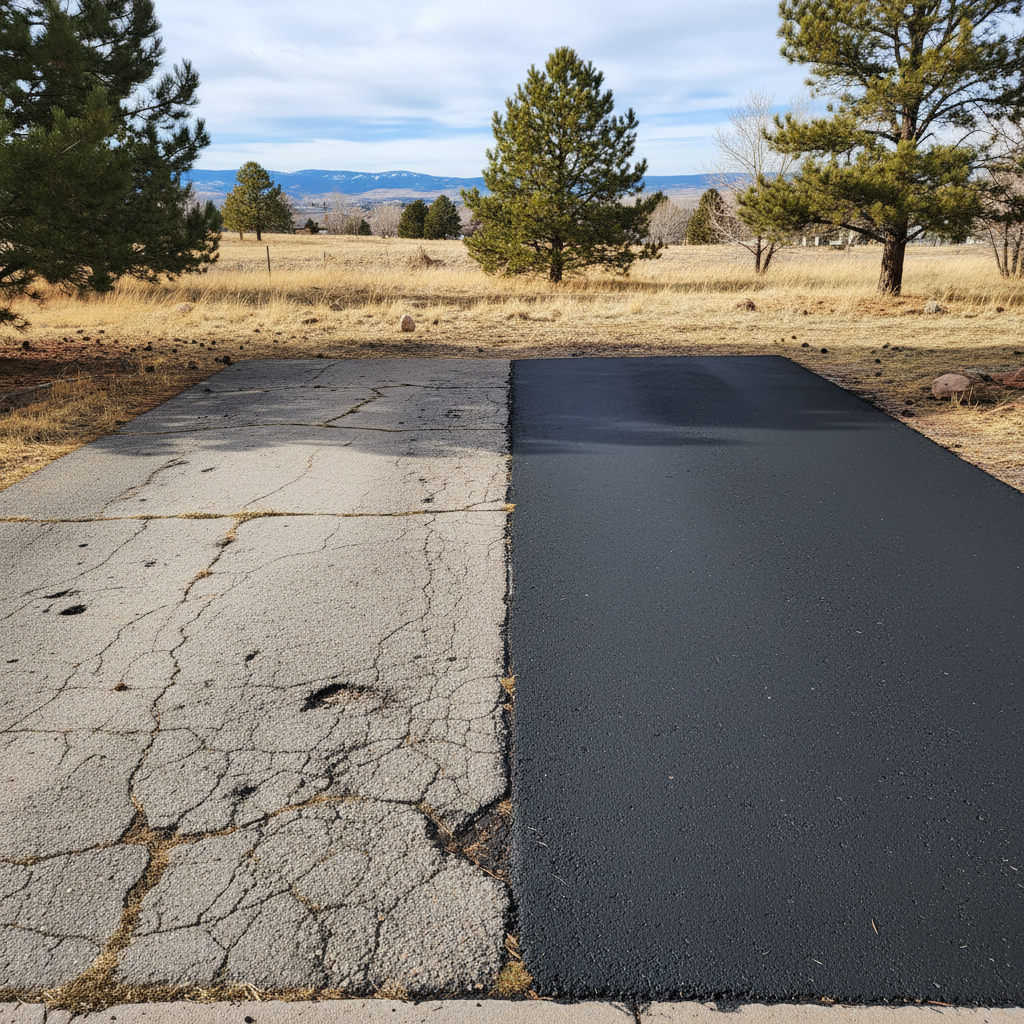
Your asphalt driveway won't last forever, especially with the crazy temperature swings we get right here in Northglenn. One minute it's 70 degrees, the next we're seeing snow, and that constant freeze-thaw cycle really does a number on pavement. When you start noticing cracks, potholes, or just general wear and tear, you've got a decision to make: do you patch it up, or go for a full overlay?
Patching: The Quick Fix
Patching is pretty much what it sounds like. We're talking about fixing specific, localized spots that are damaged. This usually means cutting out the bad section of asphalt, cleaning it up, and then filling it with fresh hot asphalt. For smaller cracks, sometimes we just do a crack fill, pouring a sealant directly into the crack to keep water from getting in.
When it makes sense:
- You have just a few potholes or cracks that haven't spread much.
- The rest of your driveway is in pretty good shape, structurally sound, not showing widespread problems.
- Your budget is tight right now, and you need a temporary fix to make your driveway last a bit longer.
- You're trying to fix a specific safety issue, like a deep pothole that someone could trip over.
Cost:
This is usually the cheapest option upfront. You're only paying for materials and labor for a small section, not the whole thing. We're talking a few hundred bucks, maybe a little more depending on how big the patches are and how many you need.
Durability & Maintenance:
Here's the catch: patches are just that, patches. They aren't meant to last as long as a brand new surface. You'll often see the patched area stand out, and it might not bond perfectly with the old asphalt. Water can still sneak in around the edges of the patch over time, which can lead to new issues. You'll probably need to do more patching down the road as other areas fail, or even when the original patch gives out. It's a bit of a whack-a-mole situation, isn't it?
Appearance:
Honestly, it's not going to look great. You'll end up with different shades of black, visible seams, and it'll be pretty obvious where the repairs were made. If curb appeal matters a lot to you, patching might not be the answer.
Full Overlay: A New Surface
An asphalt overlay is a much more thorough repair. This involves cleaning and prepping your existing driveway, taking care of any major structural issues or deep potholes first. Then, we apply a fresh layer of hot asphalt right over the old one. Think of it like putting a new coat of paint on a wall, but for your driveway.
When it makes sense:
- Your driveway has widespread cracking, "alligator cracking" (you know, that pattern that looks like alligator skin), or lots of potholes.
- The sub-base — that's the dirt and gravel underneath — is still stable and doesn't need a complete rebuild.
- You want your entire driveway to have a uniform, fresh look.
- You're looking for a repair that will last a lot longer than simple patching.
Cost:
This is a bigger investment upfront compared to patching. You're paying for more materials, more labor, and more time with our equipment. The exact cost depends on your driveway's size and how much prep work it needs, but you're probably looking at thousands, not hundreds.
Durability & Maintenance:
This is where an overlay really shines. You're essentially getting a brand new wearing surface. It'll be much more durable than patches, giving you years of protection against the elements. You'll still need to sealcoat it every few years to protect it, but overall, it's a much lower maintenance solution in the long run than constantly chasing new patches.
Appearance:
A full overlay makes your driveway look brand new. It's smooth, uniform, and really boosts your home's curb appeal. If you're planning to sell your house or just want your property to look its best, an overlay is the way to go.
My Recommendation for Northglenn Homeowners
Look, I've been doing this for a long time at M5 Distribution. I've seen countless driveways in neighborhoods all over Northglenn, from the older homes near Webster Lake to the newer builds further east. Given our climate and how asphalt ages here, my honest recommendation for most homeowners is to go with a full overlay if your driveway shows widespread damage.
Patching is a band-aid. It'll get you by for a bit, sure, but you'll likely be calling me back in a year or two for more patches. Or, eventually, for that overlay you probably should have done in the first place. You usually end up spending more money over time with constant patching than you would by just doing the job right the first time with an overlay.
An overlay provides a much better return on investment. It lasts longer, looks better, and protects your sub-base more effectively from water damage. When water gets into those cracks and freezes, it expands, causing even more damage. An overlay seals that up nicely.
Of course, there are always exceptions. If you've got one or two small, isolated issues and the rest of your driveway is solid, a patch might be okay. But if you're seeing spiderweb cracks everywhere, or multiple potholes, it's time to think bigger picture. Give us a call at M5 Distribution, and we can come out, take a look, and give you an honest assessment of what's best for your specific driveway.