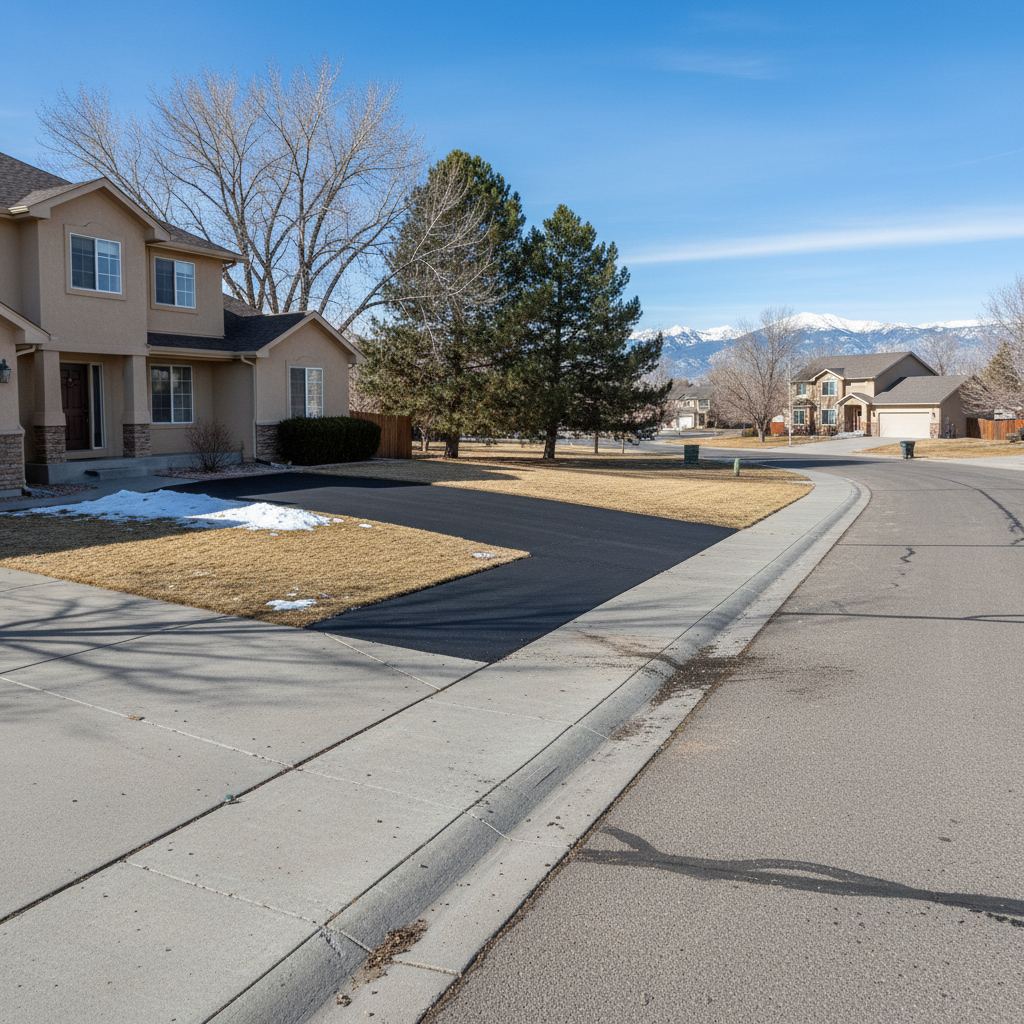
You've seen it, right? That tiny hairline crack that grows into a spiderweb, then suddenly it's a pothole big enough to swallow a small car. That's the typical story for asphalt here in Northglenn, isn't it? If you own a home near Huron Street or maybe over in the Webster Lake area, you've probably noticed your driveway or parking lot taking a real beating. It's not just about age, either; our local conditions actually play a huge role in how fast that asphalt falls apart.
Why Northglenn Asphalt Gets So Beat Up
Look, I've been doing this a long time, and one thing's absolutely clear: Colorado weather is a beast. We get those scorching 90-degree summer days that bake the asphalt, making it expand. Then, in winter, temperatures plunge down to single digits, sometimes even below zero, and everything shrinks. This constant expanding and shrinking is just brutal on asphalt. It's kind of like bending a piece of metal back and forth until it breaks – that's what's happening to your driveway, believe it or not.
Then you throw in the freeze-thaw cycles. We get snow, it melts a bit, water seeps into those tiny cracks, and then it freezes solid overnight. When water freezes, it expands, pushing those cracks wider. This whole process repeats all winter long, and by spring, what was a small crack is now a significant problem. You see it everywhere, from the older neighborhoods with mature trees whose roots are also pushing up pavement, to newer developments where the sub-base might not have been perfectly prepped before they even poured the asphalt.
Common Asphalt Problems I See Around Here
When folks call me for asphalt repair in Northglenn, it's usually for a few common issues:
- Potholes: These are the big ones, and they often start from a crack that didn't get fixed. Water gets in, the base underneath erodes, and then a chunk of asphalt just breaks away. They're not just ugly, either; they're a tripping hazard and can really mess up your car's suspension.
- Alligator Cracking: This looks exactly like alligator skin – a network of interconnected cracks. It usually means the base layer under the asphalt is failing, or the asphalt itself is just plain old and brittle. Patching these without addressing the underlying issue? That's like putting a band-aid on a broken leg.
- Edge Cracking: This often happens along the edges of driveways or parking lots where there's no support. Vehicles driving over the unsupported edge cause it to crumble.
- Raveling: This is when the aggregate (the small stones) starts to come loose from the asphalt binder, making the surface rough and pitted. It's a clear sign of aging and wear, often made worse by UV exposure and water.
Why Local Expertise Really Matters for Asphalt Repair
You might think asphalt is asphalt, right? But knowing the local conditions, the soil types – which can actually vary quite a bit even within Northglenn – and what materials hold up best here makes a huge difference. I've seen plenty of jobs where an out-of-towner comes in, does a quick patch, and it fails within a year because they just didn't understand our specific climate challenges or the typical sub-base issues we deal with.
For instance, if you've got a lot of clay in your soil, like we often do in parts of Northglenn, that soil can expand and contract a lot with moisture changes. If the base isn't properly prepared for that, your asphalt is going to suffer, no two ways about it. We take that into account when we're looking at a repair. It's not just about filling a hole; it's about understanding why the hole appeared in the first place.
When M5 Distribution comes out for a repair, we're not just throwing hot asphalt in a hole and calling it a day. We assess the damage to figure out the root cause. Sometimes it's a simple patch, sure, but often, especially with alligator cracking or significant potholes, you need to remove the damaged section, repair or reinforce the sub-base, and then lay down new asphalt. That's the only way to get a repair that actually lasts. You don't want to be calling someone back for the same problem six months later, and honestly, neither do I.
Ignoring those small cracks? That's a mistake you'll regret. What starts as a minor issue can quickly become a major, much more expensive repair. Getting on top of it early can save you a lot of headache and money down the road. Keep a close eye on your asphalt, especially after those big snow melts or heavy rainfalls. If you see something, say something – to us, that is. We're here to help keep your Northglenn driveways and parking lots in good shape.